How much do solar roof tiles cost in the UK?
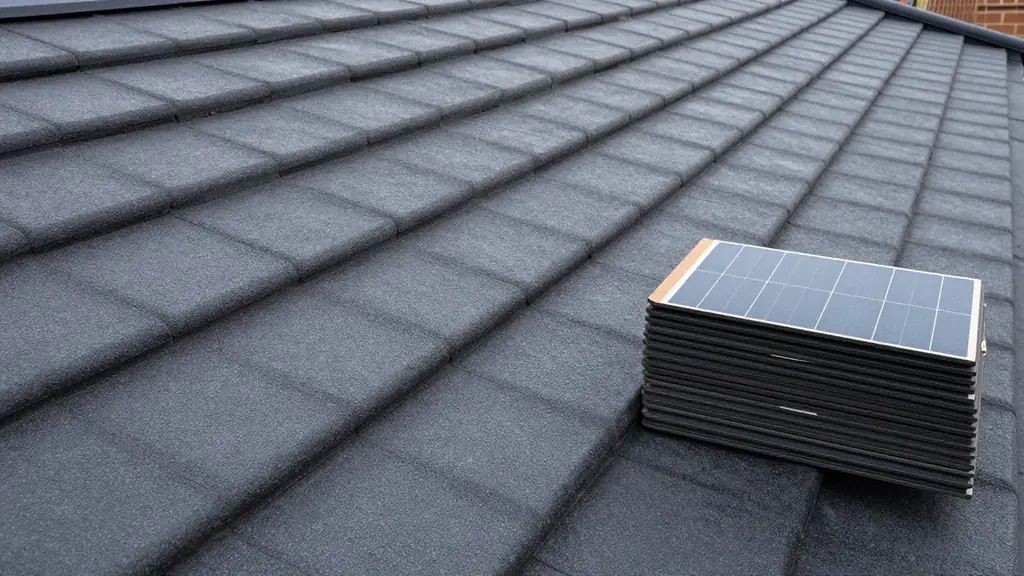
Solar roof tiles cost more than standard panels, and the gap is large. Published UK figures put a typical tile system at around double the price of a panel system, sometimes more. The honest answer to “how much do solar roof tiles cost” is a range, not a single number.
This guide sets out what two consumer sources publish, shows how to read them, and explains what moves the price on a real roof. We do not publish our own price list, because every roof differs. Instead we show you the benchmarks and the reasons behind them.
Published prices for solar roof tiles
Two UK consumer sites give clear tile prices by system size. The first is The Eco Experts, which publishes figures on its own page. The second is Expert Reviews, which cites The Eco Experts data from June 2023. Because they share a data origin, treat them as one view of the market, not two independent ones.
Here is what they publish for tile systems.
| System | Expert Reviews (citing June 2023 data) | The Eco Experts page |
|---|---|---|
| 1kW (1-bed flat) | £8,050 | £9,000 |
| 2kW (1-2 bed house) | £9,900 | £10,500 |
| 3kW or 3.5kW (3-bed house) | £14,550 (3.5kW) | £13,000 (3kW) |
| 5kW (4+ bed house) | £16,550 | £16,000 |
The rows are not identical in size, so compare with care. Even so, a typical three-bedroom system lands around £13,000 to £14,550. A five-kilowatt system sits near £16,000 to £16,550.
How that compares with panels
Both sources give a panel benchmark for a 3.5kW system. First, Expert Reviews puts it at £5,500. The Eco Experts says about £7,000 for a regular PV system (page updated April 2025). Against a tile price of £13,000 to £14,550, that is a premium of roughly two to two and a half times.
Expert Reviews goes further and says tiles can cost up to four times as much once installation is counted. Our reading is more cautious. The gap is real, but it varies with the roof and the product.
Remember that these are consumer guides, not quotes. Also, prices move, and the June 2023 data is now a few years old. Treat the table as a way to judge a quote, not to replace one.
Slates are priced differently
Solar slates follow a different pricing pattern from tiles. We found a published price for only one slate product, from a single source, so we do not quote it here. Treat slate pricing as something to request in writing, because it varies by product, roof area and installation.
GB-Sol makes its slates in Wales and describes them as lighter and stronger than traditional slates. So if your roof is natural slate, our guide to fitting solar to a natural slate roof explains the options. A slate system can look very close to the real thing.
What drives the price on your roof
The table shows averages. Therefore, your own figure depends on a handful of factors.
- Roof size and shape. Hips, valleys, dormers and chimneys all add cutting and flashing work.
- Whether you re-roof anyway. If the roof needs renewing, tiles replace a cost you would meet regardless. The Eco Experts notes that you need to replace the covering to fit them.
- Access. A tall or tight site raises scaffold and labour costs.
- Product choice. Single-tile units and large in-roof modules price differently.
- Planning and drawings. A sensitive site needs more design work before anyone climbs a ladder.
The re-roof point matters most. When the roof is due for renewal, the premium for a solar covering shrinks, because part of the cost is already spoken for.
Is the premium worth it?
Think of the extra cost as paying for a result. On a plain roof with no limits, panels generate more per pound, so the numbers favour them. Indeed, Expert Reviews says as much, and recommends panels on price and efficiency grounds.
On a roof with design limits, the sum changes. For example, if planners will refuse a raised array, or the house is simply too good to spoil, the tile premium buys something panels cannot. For sites like that, a flush option may also be cheaper than tiles. Read our comparison of in-roof and on-roof solar to see where the middle ground lies.
Cheaper routes to a quiet roof
You do not have to choose between tiles and a rack. Instead, a framed in-roof panel sits flush and costs less than a full tile system. Our post on in-roof mounting systems compares the approaches. Choosing all-black solar panels is another way to calm a roof without a big jump in price.
Within the tile family, the choice of product matters too. For one famous name, see whether the Tesla Solar Roof is available in the UK. The Eco Experts says it is not currently available.
Planning the spend
Treat a tile project as part of the build, not an add-on. In addition, our guide to what BIPV is shows how integrated roofs are priced against the wider building. If you are building new, designing solar into a self-build explains how early decisions save money.
Location changes the picture a little. For instance, a London terrace may need tighter access and more design work, so see our page on solar for London’s period terraces. In a historic core, such as solar for Oxford’s collegiate streets, planning advice should come before the quote.
How to compare quotes
Once you hold two or three quotes, line them up on the same basis. Ask each firm for the price per kilowatt, the module or tile model, and the warranty terms. Then check what the figure includes.
Some quotes include scaffolding, the inverter and the roof covering around the array. Others leave those out. As a result, the lowest headline number is not always the lowest real cost.
Ask also how the firm treats the rest of the roof. If the array is a small patch, the junctions with ordinary tiles decide how good the finished roof looks. A careful installer will show you that detail on a drawing before work starts.
Finally, think about the long view. A tile roof is also the roof covering, so it should last as long as the house needs it to. Ask how the supplier handles repairs, and who is liable if a leak appears at a junction.
Get a priced design
Our solar roof tiles and slates service starts with a design review. We also offer in-roof solar where a flush panel is the sensible compromise. Send us your drawings and we will tell you which route fits the roof and the budget.