In-roof vs on-roof solar panels: looks, cost and performance
In-roof and on-roof solar panels do the same job in different ways. On-roof panels sit above your tiles on a frame. In-roof panels replace part of the covering and sit level with it. This guide compares the two on looks, cost, performance and planning.
The right choice depends mostly on your roof and on how visible it is. First, here is the basic difference.
How each system works
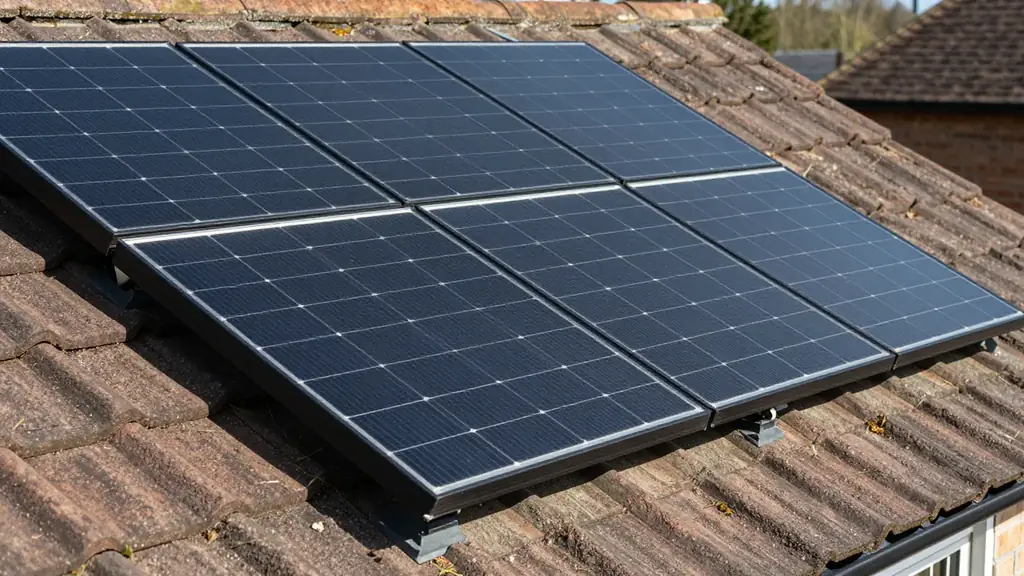
On-roof panels clamp to rails on the roof structure. They sit a few centimetres above the tiles. Air passes freely underneath, and the roof beneath stays intact.
In-roof panels, by contrast, go into the roof itself. The installer removes the tiles or slates in the array area. A tray then holds the modules, and flashings seal the edges. The panels become the weatherproof layer.
Some products take this further, so the line between the two blurs. Makers design solar slates and tiles to lay course by course. We cover that route in our solar roof tiles and slates service. Our in-roof solar service covers framed modules fitted flush.
Looks
This is where in-roof systems earn their place, because they remove the visual clutter. A flush array reads as one dark plane. There are no rails, no gap and no raised edge to catch the light. On a visible front slope, the difference is clear.
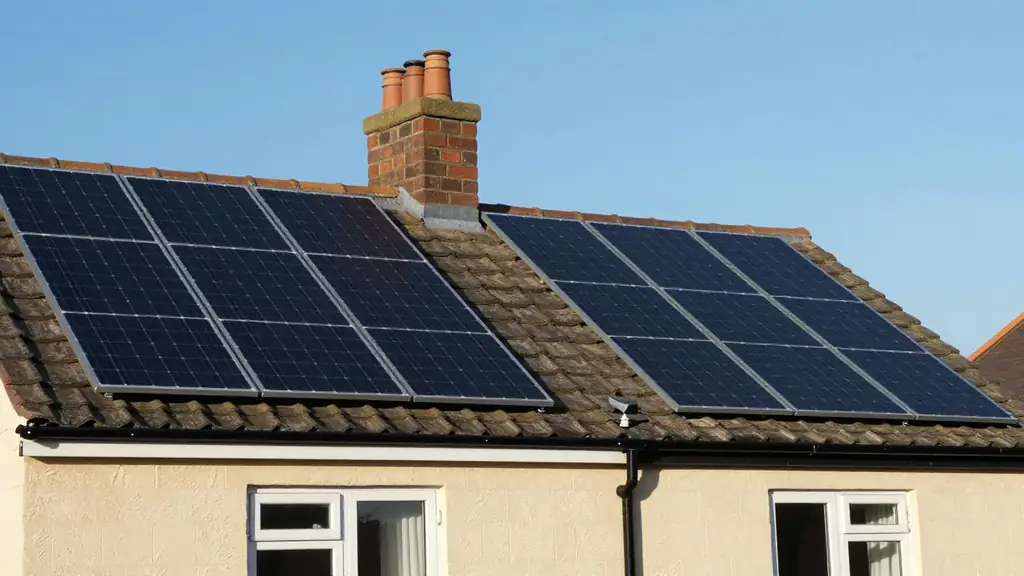
On-roof panels are not ugly by default, however. A tidy array on a rear slope can look perfectly calm. An all-black module also helps, and we discuss it in all-black solar panels: when a full-black module is worth it.
The visibility of the roof therefore matters most, since a hidden roof forgives more. A roof seen from the street deserves more design effort than one hidden behind a parapet. That is the case in solar for Oxford’s historic centre, where many roofs are seen from lanes and courts.
Cost
In-roof systems cost more up front. Two independent installer guides say so, one of them pointing to the extra installation work and specialist trays. Neither gives a single price we can verify, so we will not quote one. Get itemised quotes for both routes on your own roof.
There is one important exception. For example, if the roof needs replacing anyway, the picture changes. One guide notes that an in-roof array saves scaffolding costs and reduces roofing material when fitted with a new roof. In that case, the gap can narrow a good deal.
For this reason, we usually advise owners to wait for a re-roof if the existing covering is sound. Fitting in-roof panels to a roof that still has years left is rarely sensible.
Performance and heat
Solar modules lose some output as they get hot, so airflow matters. On-roof panels have an air gap underneath, so they cool more easily. In-roof panels have less ventilation.
How much this matters is disputed. One UK installer guide says in-roof panels are usually 5 to 10 per cent less efficient. Another says performance is similar, with a marginal effect only in very hot weather. Because the evidence is mixed, we treat heat as a design factor to model for each roof.
However, orientation, pitch and shading usually matter more than the mounting method. A well-sited in-roof array can beat a badly sited on-roof one.
Warranty and repair
Warranties differ. One guide says in-roof panels typically carry 15 years, against 25 years for standard on-roof panels. Check what each product covers, because power output, weatherproofing and workmanship may be separate.
Repair is also different, because access changes. On-roof panels are easier to reach. An in-roof module is part of the roof, so replacing it takes more care. A good installer will leave a clear record of how the system is fitted.
Planning and heritage
The same guide notes that most in-roof systems need no planning permission. Listed buildings and conservation areas are the exceptions. They also matter for on-roof panels.
Our guide to solar panels in conservation areas explains the usual conditions. For listed homes, read solar panels on listed buildings. Both are worth reading before you choose a system.
Roof type and landscape
Your roof covering also affects the choice. A natural slate roof, for example, needs particular care, and we are preparing a post on fitting solar to a natural slate roof.
The setting matters too. In solar for the Cotswolds’ stone villages, a roof is part of the village scene. Our post on solar in National Landscapes covers the extra design care that protected areas may call for.
Choosing the mounting system
If you choose in-roof, the tray system matters. It decides how the panels meet the roof edge and how water is shed. Our comparison of in-roof solar mounting systems looks at the options.
Designing it in from the start
Self-builders therefore have the best chance of getting this right. The roof, the array and the cable routes can all be drawn together. See designing solar into a self-build for how to approach it.
What to ask your installer
Good quotes make the comparison easy. Ask for both routes priced on the same roof, so you can see the true gap. Then ask four more things.
- How will the array meet the ridge, hips and edges?
- What happens to the roof if one module fails?
- Which parts of the warranty cover weatherproofing, not just power?
- Who is responsible if water gets in?
Answers to these questions tell you more than a brochure. In practice, an installer who cannot answer them clearly has probably not fitted many integrated systems.
When on-roof is the better choice
We do not push in-roof by default. If your roof is sound, your array is on a rear slope and your budget is tight, on-roof is a sensible answer. It is simpler, it is easier to reach and it leaves your existing roof untouched.
A tidy on-roof array with a dark frame and a dark back sheet can look calm. Even so, it will always sit proud of the tiles. For a prominent elevation, that raised edge is the thing a design-minded owner notices first.
A simple way to decide
To decide, ask three questions. Is the roof seen from the street? Is the roof being replaced anyway? Is the building listed or in a conservation area?
If the answer to the first two is yes, in-roof is likely to be worth the extra. If the roof is hidden and sound, on-roof panels are usually the sensible choice.
Next step
Tell us about your roof and we will say which route fits. Start with our in-roof solar service. Then send us your drawings for a clear view.