All-black solar panels: when a full-black module is worth it
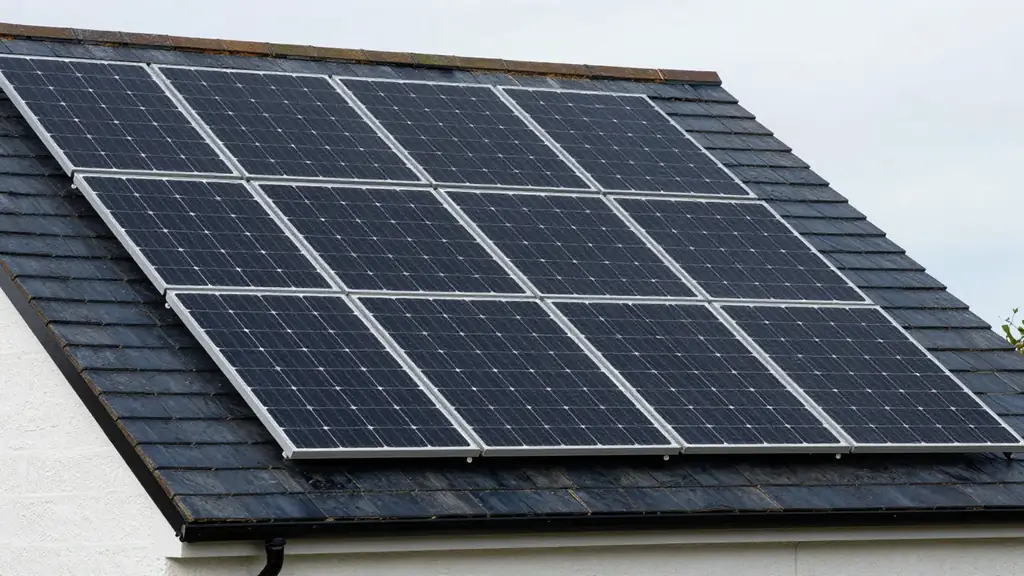
All-black solar panels have no white backsheet and no silver frame. The whole array reads as one dark surface, which suits slate, dark tile and modern cladding. This guide explains what makes a panel all black, what you trade for the look, and when a full-black module is worth choosing.
What makes a panel all black
First, the basics. A standard panel has a white or pale backsheet and a silver aluminium frame. Between the cells, thin white lines show. From the street, that pattern makes a grid, and the grid is what the eye picks out first.
An all-black module removes those lines. One guide describes an all-black panel as one with a black backsheet and a black frame, giving a uniform appearance. The cells themselves are made in much the same way as in a standard monocrystalline panel. Some products also use dark busbars or dark wiring, which makes the surface even calmer.
So an all-black panel is a finish choice more than a different technology. That is useful to know, because it means the electrical performance is broadly similar to a standard module of the same type.
Where all-black panels look best
In practice, the look works best against a dark background. On a blue-grey Welsh slate roof, an all-black array can almost vanish. On a Georgian terrace with a low slate pitch, it reads as one quiet plane. In contrast, on a red clay tile roof, any black panel will stand out, however neat the finish.
Edges also matter. A black frame next to a silver one looks mismatched, so the whole system should be specified together. Our guide to in-roof solar mounting systems explains why. GSE lists aluminium or black finishes for its in-roof kit, so you can match the frame colour to the modules.
Flashings are the other half of the story. For example, black or dark-grey flashings keep the outline of the array crisp. Bright metal edges can undo the calm look you paid for.
What you trade for the look
However, all-black is not free. There are three trade-offs, and the honest ones are small.
First, heat. A dark surface absorbs more heat, and panels lose efficiency as they warm. One UK guide notes that all-black panels warm up more than standard models, with a slight drop in performance. In a British climate the effect is modest. Even so, it is worth reading the temperature coefficient on the datasheet.
Second, price. The same guide says black panels have been dearer than blue ones upfront. The gap now varies by product and supplier, so ask for both prices on your own roof. Do not rely on a general figure.
Third, fit. Not every module size works with every mounting system. In-roof frames are built around specific panel dimensions. Check that the module you like fits the system you need.
All-black versus truly integrated
Meanwhile, an all-black panel on brackets is still a panel on a roof. It sits above the slates, and its edges cast a shadow line. For some homes, that is fine. For others, the roof plane matters more than the panel colour.
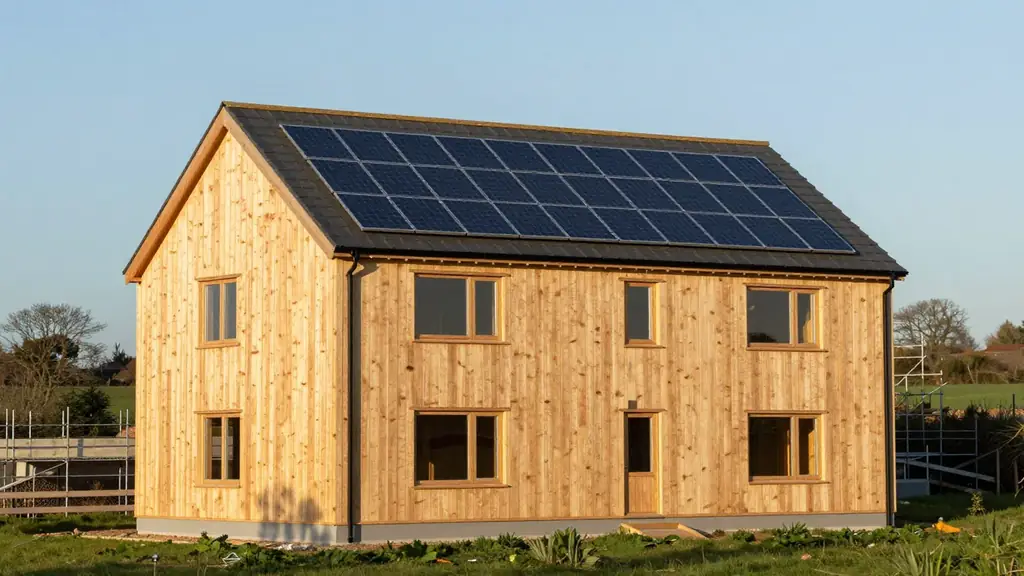
If you are building new, designing solar into a self-build lets you choose the module before the roof is drawn. If the roof is a main feature, a flush system will usually look better than a raised one, even in all-black. Our comparison of solar roof tiles in the UK shows the next step up. Solar slates and tiles replace the covering itself, so there is no module frame to see at all.
When a full-black module is worth it
In practice, all-black earns its place in four situations.
- The roof is dark slate or dark tile, and the array will sit on a visible elevation.
- You are building flush in-roof, where tidy edges are the whole point.
- The house is in a protected setting, where a calmer design helps your case.
- You simply care about the look, and the small cost is acceptable.
It matters less on a hidden rear roof, a flat roof behind a parapet, or a barn that nobody sees. There, a standard module will do the same job for less.
How to specify an all-black module
Specifying is simple if you take it in order. First, choose the mounting system, because it fixes the panel size and frame colour. Then compare the datasheets of two or three black modules that fit it. Look at rated power, the temperature coefficient and the warranty terms.
Next, ask for the layout drawing. It should show the module rows, the margins to the ridge and eaves, and any cut slates. As a result, you can judge the finished elevation before a single panel is ordered. Finally, check the flashing colour and the colour of the cable runs. Small details like these decide whether the roof looks designed.
Black panels and heritage settings
However, colour does not change planning rules. In England, roof solar is limited by protrusion, height and position. It is not allowed on a listed building under the general permitted development rights, and in a conservation area it cannot go on a wall, balcony or roof enclosure that fronts a highway.
Within those rules, design still counts. A conservation officer will look at the whole elevation, so A uniform black array with neat margins looks like a decision. A patchwork of silver frames looks like an afterthought. Our guide to solar panels in conservation areas sets out what to expect, and the same applies to solar panels on listed buildings.
Also, Scotland has its own planning system, so read solar panels and planning permission in Scotland if you are north of the border. In protected countryside, see solar in National Landscapes for how to keep the view intact.
Local examples
For example, Bath’s honey-coloured stone and dark slate roofs suit black arrays well, and we cover the rules in our note on solar for Bath’s listed terraces. In London, many inner roofs are slate and highly visible, so see solar for London’s slate roofs and conservation areas for what to expect there.
If a garden room or outbuilding is a better place for panels than the main house, see our guide to ground-mounted and outbuilding solar for listed homes.
Next steps with Solar Creative
Because finish matters, we specify the module and the mounting system together, so the finish matches from frame to flashing. Our in-roof solar service covers that work. If your project needs a one-off layout, our bespoke solar design service starts from the elevations.
Then send us your drawings or a few photographs of the roof. We will tell you whether all-black is worth it for your house.